

Why Muscle Tightness Doesn't Always Mean the Muscles Are the Problem
Written by the Mudras clinical team, NYC licensed massage therapists. Reviewed September 2026. This article is general wellness information, not a diagnosis and isn't a substitute for care from a physician or physical therapist.
Stretching every morning. Foam rolling after every workout. Heat, ice, the muscle rub from the pharmacy aisle. And the same tight spot in the neck or lower back, that same stubborn knot, is back within a day or two anyway.
Sound familiar? We hear a version of this from clients constantly and the muscle itself is often not the whole story. Every muscle is wrapped in fascia, a layer of connective tissue that links muscle fibers to the structures around them. NIH's National Center for Complementary and Integrative Health notes that this fascial network plays a role in transmitting force and coordinating movement across the body. When fascia tightens, it can pull on the muscle it surrounds and produce something that feels exactly like ordinary muscle tightness, sometimes even a muscle knot you can feel under your fingers, even though the muscle fiber itself isn't really where the problem started.
That's the premise behind myofascial release therapy, a hands on manual therapy built around treating the connective tissue layer directly instead of the muscle alone. It's usually what people are actually searching for when they look up myofascial release in NYC after stretching hasn't done much.
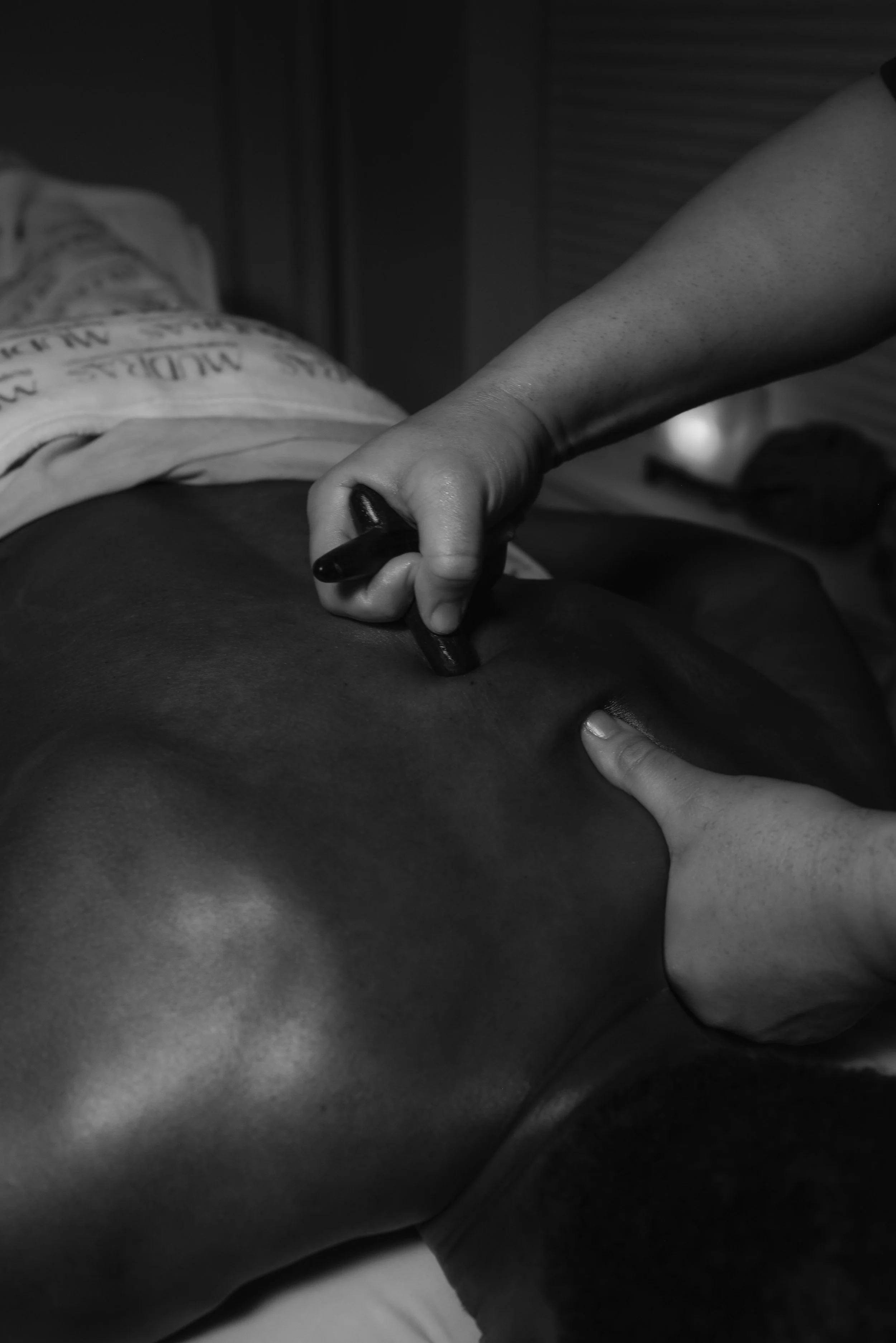
What Fascia Actually Does
Fascia gets filed under connective tissue which undersells it. Picture one continuous, body wide layer that wraps individual muscles, organs and nerves into a connected system rather than a pile of separate parts.
Fascia research is still a developing field and honestly, we try to be upfront about that with clients rather than presenting it as a fully settled science. What current evidence does support is that fascia can thicken, stiffen or form small adhesions in response to injury, overuse or long stretches without movement and that this soft tissue restriction contributes to reduced mobility and pain for some people.
Muscle Tightness Versus Fascial Restriction
These two can feel nearly identical which is exactly why they get confused. The difference usually comes down to how they respond and where the discomfort actually shows up.
Ordinary muscle tightness usually settles with rest and stretching within a few days
Fascial restriction is stickier. A stretch might feel great for twenty minutes, then the tension is right back, because the fiber has lengthened but the connective tissue wrapped around it hasn't
Referred pain is also common with fascia. Tension in one area can surface as discomfort somewhere else entirely, since fascia runs continuously through the body. A tight hip can change gait mechanics for some people, something a physical therapist would typically assess directly. Clients sometimes connect upper back and neck tightness to tension headaches too, though that particular link is more anecdotal than proven in research
The clinical term for this overall pattern is myofascial pain syndrome, a recognized source of chronic muscle tension involving tender points within a taut band of muscle and fascia. A study indexed in the National Library of Medicine's PMC database puts the prevalence at 10 to 20 percent of the general population, climbing much higher among patients seen at specialized pain clinics. A licensed massage therapist can't diagnose the syndrome itself but the numbers make one thing obvious: this is a common presentation, not a rare one.

Why Stretching Alone Sometimes Isn't Enough
Stretching lengthens a muscle. Foam rolling applies broad pressure for a short window. Both genuinely help plenty of people and honestly, we're not suggesting anyone skip them.
A 2026 review in the journal Frontiers in Physiology describes fascia focused manual therapy responding to slow, sustained mechanical pressure held over time. That's a different stimulus than the quicker, repetitive pressure of foam rolling and the review notes researchers are still working out the exact physiological pathway behind it. In the studio, this is why myofascial release so often gets paired with deep tissue massage in the same session rather than offered as a standalone add on. Treating the muscle and the connective tissue wrapped around it together tends to hold up longer, at least in our experience with clients.
What Tends to Tighten Fascia
A handful of patterns come up again and again with clients and if you recognize a few of these in your own week, that's not a coincidence:
Long stretches of sitting or repeated postures. Office workers in particular spend the bulk of their working hours seated, a pattern the National Library of Medicine has linked to complaints in the neck, shoulders and lower back
Old injuries or surgical scar tissue that never fully resolved
Ongoing stress which can keep muscles and the tissue around them in a low level guarded state
Repetitive movement from training, sport or physically demanding work
Long periods without much movement at all
None of these guarantee fascial tightness on their own. They're simply the patterns that tend to show up alongside it.
Signs Worth Paying Attention To
Tension that returns fast after stretching or a regular massage is one clue. Discomfort that shows up somewhere other than where it started is another. A range of motion that stays limited even when the muscle doesn't feel sore or tightness that's lingered for months rather than a week or two, can both be worth a closer look rather than another week of the same stretch.
A hands on evaluation is really the only way to know for sure what's going on. And if pain is severe, sudden, tied to a specific injury or paired with numbness or weakness, that calls for a physician or physical therapist rather than a massage session.
How Myofascial Release Actually Works
Myofascial release targets the connective tissue layer directly. A trained therapist applies slow, sustained pressure rather than quick motion, working with the direction the fascia naturally moves in instead of forcing against it. Because fascia is continuous, we often end up treating a wider region instead of just the sore spot someone points to. In our experience, a tight hip frequently gets worked alongside the lower back and glute, since restriction in one area often seems connected to tension in the next, even if the exact mechanism isn't fully mapped out in research yet.
It's a manual therapy technique a lot of clients find genuinely helpful for easing tension and improving mobility and some clinical studies report similar improvements in pain and range of motion. It isn't a guaranteed fix, though and how much it helps depends on how long an issue has been building and what's actually driving it.
How Mudras Approaches This
At Mudras, myofascial release isn't an add on tacked onto a massage menu. It gets worked into a session alongside deep tissue massage, since muscle tension and fascial restriction are rarely two separate problems in practice. When tension is radiating into the neck or shoulders, we often bring in trigger point therapy as well.
That layered approach is really the idea behind BodyReset, our signature treatment at the Chelsea studio. No two sessions look the same, because no two people carry chronic tension patterns the same way. A BodyReset session typically includes:
A real conversation first, not a script, covering where tension sits, how long it's been there and what's already been tried
A mix of techniques drawn from deep tissue work, trigger point therapy, neuromuscular therapy, myofascial release or assisted stretching, chosen based on what your body actually needs that day
Work on both the muscle and the fascia around it, rather than one isolated point
Specialists with fifteen to twenty years of individual experience across these techniques with that same intake conversation happening every time before any hands on work begins
Most clients describe the pressure as deep and sustained rather than sharp and many leave feeling noticeably looser with more improvement settling in over the following days. Tension that's built up over months usually needs more than one visit before the change really holds.
If stretching and standard massage have only bought you a day or two of relief, a session built around both the muscle and the fascia around it might be the missing piece. Contact us and our Chelsea team can walk through what has and hasn't worked so far.
FAQs
Q. Does myofascial release hurt?
Tighter areas can feel pretty intense under pressure but it shouldn't feel sharp. Deep, sustained pressure is the norm and a good therapist checks in throughout and backs off if needed, this isn't supposed to be something you white knuckle through.
Q. How is it different from a regular massage?
Regular massage mostly kneads and relaxes the muscle itself. Myofascial release works the connective tissue wrapped around it, using slower, held pressure instead of kneading motion.
Q. How many sessions before I notice a difference?
One session is sometimes enough to feel looser. Tissue that's been restricted for months or years usually takes a few visits before the change actually sticks around.
Q. Can tension in one area cause pain somewhere else?
It's a common report from clients, upper back tension coinciding with headaches being a frequent example. Because fascia connects through the body, working at the source sometimes eases discomfort in a completely different area.
Q. Is it safe with an old injury or a health condition?
Often yes but it comes down to specifics. That's the reason the intake conversation happens before any pressure is applied. Some conditions genuinely warrant a check with a physician first and a good therapist will tell you when that's the case.
This article is general information and reflects our clinical approach at Mudras. It isn't medical advice. Persistent, severe or unexplained pain is worth a conversation with a physician before or alongside any bodywork.
