

How Tight Fascia Can Affect Mobility, Posture and Everyday Movement?
A stiff shoulder or cranky lower back usually gets blamed on bad sleep or rough workout. Sometimes it's nothing serious. But when the same tightness keeps returning, it may be worth looking at what is contributing to it. But if the same tightness keeps coming back in the same spots, even after stretching or a decent night's rest, there may be other factors contributing to the recurring tightness. That something is fascia.
Fascia is connective tissue wrapped around muscles, nerves, organs and joints. It holds everything together as one continuous network instead of bunch of separate parts. Most of time you may not even pay attention. But when it tightens up, it can slowly change how you stand, how far you can move and how your body feels doing the things you do every day without thinking twice.

What Fascia Actually Does In Your Body
Picture fascia less as single tissue and more like wrapping system that runs through your entire body. It surrounds each muscle fibre, bundles those fibres into groups, then connects those groups to whatever is next to them. Because of that, fascia rarely stays in one lane. Because fascia connects with surrounding tissues, restrictions or sensitivity in one area may influence how nearby or connected regions move. However, the relationship between fascial tension and symptoms elsewhere is complex.
When fascia is doing its job, it glides smoothly as your muscles lengthen and contract, which is big part of why movement feels easy on good day. But when it tightens from stress, an old injury, repetitive motion or just sitting the same way too long, that gliding slows way down. Sometimes the sensation of tightness may involve the connective tissues around a muscle, along with the muscle itself and other structures involved in movement.
There's actual research behind this, too. A systematic review of randomized controlled trials published in the Journal of Bodywork and Movement Therapies describes myofascial release as manual work built on gentle, sustained pressure held over time rather than quick pushes, and the researchers found the overall evidence on its effectiveness for pain and function to be encouraging. That difference, sustained pressure versus brief stretch, is a big part of why fascia doesn't respond the same way muscle does.
How Tight Fascia Changes The Way You Stand And Sit
Posture usually gets blamed on weak muscles, something you're supposed to fix by sitting up straighter or doing more core work. Fascia is one of several tissues that may influence how the body moves and holds a position. Posture is more complex than simply having weak muscles or tight connective tissue.
A forward head and rounded shoulders often come from fascia across the chest and upper back staying shortened, especially after hours at a desk or looking down at phone all day
Notice one shoulder or hip sitting higher than the other? That's often fascia pulling tighter on one side than the other
Shifting your weight onto one leg without ever deciding to do it is usually a sign that fascia through the hip or lower back has lost some of its normal give
Even a lower back that feels tight on a day you barely moved can trace back to fascia around the hips changing how your pelvis tilts
None of this means your muscles are weak. It usually means tissue wrapped around them stopped moving the way it's supposed to.
The Mobility Limits That Come With Fascia Restriction
Reduced range of motion can have several causes, including changes in muscles and connective tissue. A mobility assessment can help identify what may be contributing to the limitation. A muscle can be fully capable of contracting, and a joint still won't move through its full range if the fascia around it is restricted.
A few patterns tend to show up again and again:
Trouble getting an arm all the way overhead without the shoulder blade doing extra work to compensate
One hip that's noticeably stiffer than the other, especially first thing in the morning, and that takes longer to loosen up through the day
Less rotation through the spine when you turn to look behind you, so your whole upper body has to twist instead of just your torso
A clear difference in how freely one side of your body moves compared to the other, even with no injury to explain it
Everyday Movements Where Fascia Tightness Shows Up First
Fascia restriction doesn't really announce itself. It shows up in small, ordinary moments long before anyone would ever call it pain. A few examples that come up a lot for people living and working in a city built around walking, sitting and commuting:
Reaching for something on a high shelf and feeling the pull run through your shoulder and upper back together, not just your arm
Turning to check a blind spot in traffic and noticing your neck and mid back move like one stiff block instead of turning smoothly
Standing up after a long subway ride or a stretch at your desk and needing a second before your hips feel normal again
Walking up stairs and noticing stiffness in your calves, hips, or lower back, especially when one side feels different from the other
Bending down to tie a shoe and feeling hamstring resistance kick in well above the knee
None of these are dramatic. Which is exactly why they get ignored for months, sometimes years, before anyone bothers to deal with them directly.
Why Stretching And Foam Rolling Only Go So Far
Stretching and foam rolling can help some people feel less stiff and move comfortably but results can vary. These techniques may influence muscle sensitivity, movement tolerance and how the body responds to pressure.
Myofascial release uses hands on techniques to address areas of discomfort or restricted movement, without assuming that every mobility problem comes from fascia alone.
How Mudras Work With Fascia Restriction During A Session
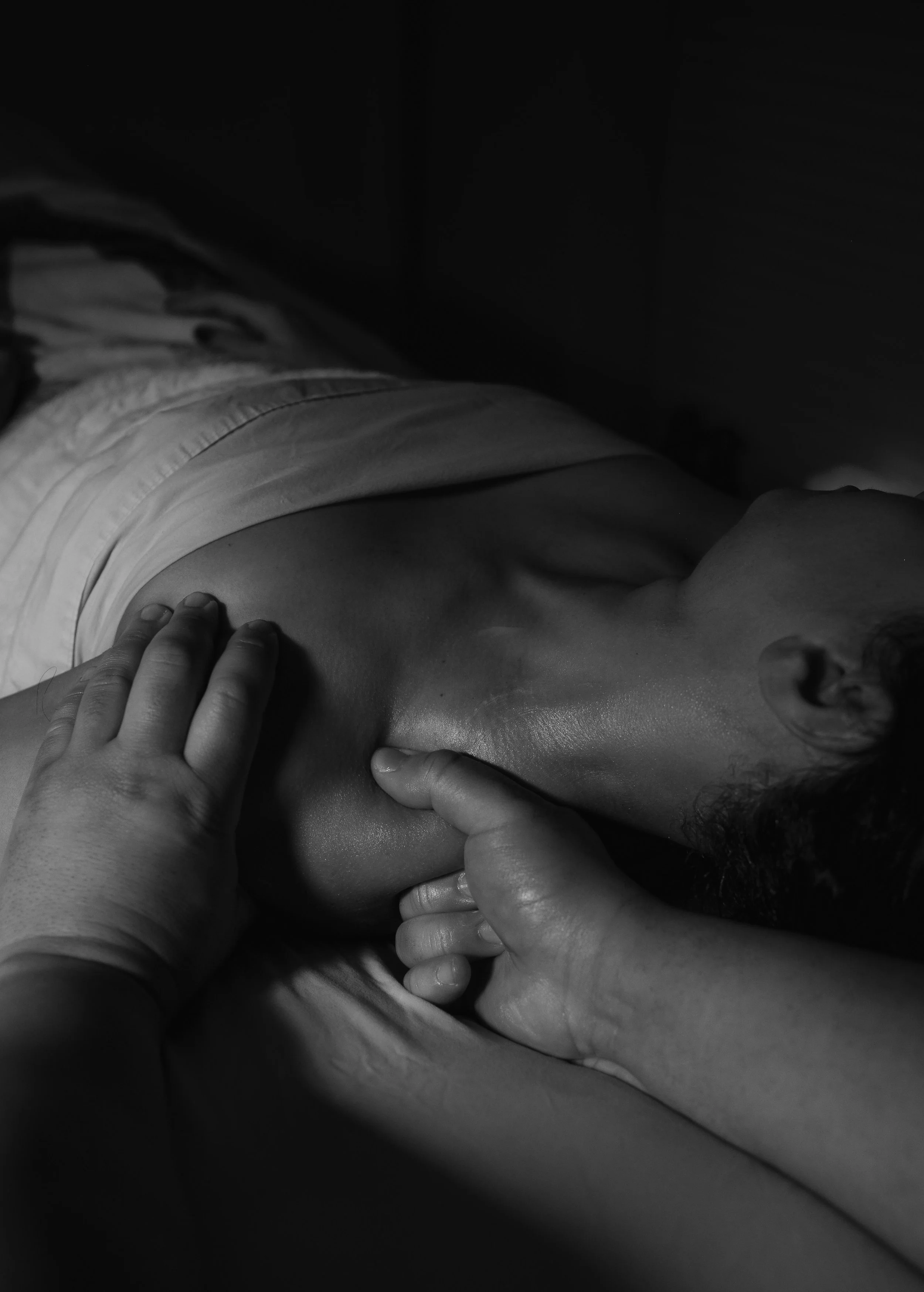
At Mudras, myofascial release isn't treated like some extra step tacked onto a massage. It's built right into the BodyReset session along with deep tissue work and trigger point therapy, because muscle tension and fascia restriction usually show up together in the same area of the body.
Founder Yotam Kafri brings over 18 years of experience to this approach, as a third generation practitioner trained across Western, European and Eastern massage traditions. The Mudras team includes experienced specialists with extensive backgrounds in massage and bodywork. Their training covers different approaches, including myofascial release, neuromuscular therapy, trigger point work and sports massage, allowing each session to be adjusted to the client's needs.
What that actually looks like in a session is pretty simple. There's no fixed routine that everyone receives. Each session starts with a conversation about where movement feels restricted or where posture has felt off, and the specialist adjusts based on how your body is presenting that day, whether that means spending more time on the hip, the upper back, or wherever the fascia is holding the most.
FAQs
Q. Can tight fascia really change my posture?
Yes, it can! Fascia connects across large areas of the body, so tightness in one place, like chest and shoulders, often pulls posture out of alignment somewhere else.
Q. Why does foam rolling only help for a short while?
Foam rolling works in small area for short time. Fascia is dense and usually needs sustained, direct pressure over longer stretch to actually change how it moves.
Q. Can tight hip actually cause stiffness in the opposite shoulder?
It can, actually. Fascia runs through connected lines in body, so tension in hip can travel and show up as stiffness in a totally different place.
Q. How do I know if it's muscle tightness or fascia restriction?
Muscle tightness usually eases up after normal stretching. Fascia restriction tends to come right back and often limits movement even after muscle underneath has relaxed.
Q. How many sessions does it usually take before mobility feels different?
Some people can feel relaxed just after one session. A pattern built over months or years usually takes few sessions spaced out consistently.
