

Common Pregnancy Discomforts That Prenatal Massage May Help Address
At Mudras, your prenatal massage begins with a conversation. Your therapist asks about your trimester and any discomfort you have. Then, we create a safe and comfortable session based on your needs.
From there, we build the session around safe positioning and techniques suited to what your body is carrying right now. If you are looking for the best prenatal massage in Chelsea, this is what sets real prenatal care apart from a studio that simply lightens its usual massage and calls it prenatal.
Why Pregnancy Brings On a Different Kind of Discomfort
Your body works hard during pregnancy. Hormones loosen the ligaments around your joints. Your center of gravity shifts forward as your belly grows. Muscles that never had to work this way before start picking up the slack. This is why so much of the discomfort shows up in the back as well as in the hips and legs.
Common Discomforts We See at Every Stage
Lower back pain
The growing belly can change posture and place additional strain on the lower back and surrounding muscles.
Hip and pelvic tension
Changes in ligaments and posture including the center of gravity can contribute to tension or discomfort around the hips and pelvis.
Swelling in the legs and feet
Pregnancy can increase fluid retention and put pressure on blood vessels which may contribute to swelling in the legs and feet later in pregnancy.
Sciatic type leg pain
Changes in posture, the pelvis and surrounding muscles during pregnancy can contribute to pain that travels through the buttock and leg.
Neck and shoulder tension
This often builds from posture changes then continues after birth from holding and feeding a newborn.
Trouble sleeping
Limited comfortable sleeping positions can leave certain muscles tight and sore by morning.
What the Research Says About Prenatal Massage
Research on prenatal massage is still growing, but what exists so far is encouraging. A review of twelve randomized controlled trials found that massage during pregnancy was associated with improvements in stress, anxiety and pregnancy related back or leg pain among the populations studied. The review also noted that side effects were rare and minor. This is helpful evidence, not a guarantee and it does not replace medical care.
How We Adjust Each Session to Your Trimester
First trimester - Sessions can be adjusted around fatigue, nausea and increased sensitivity, with positioning and pressure adapted to your comfort.
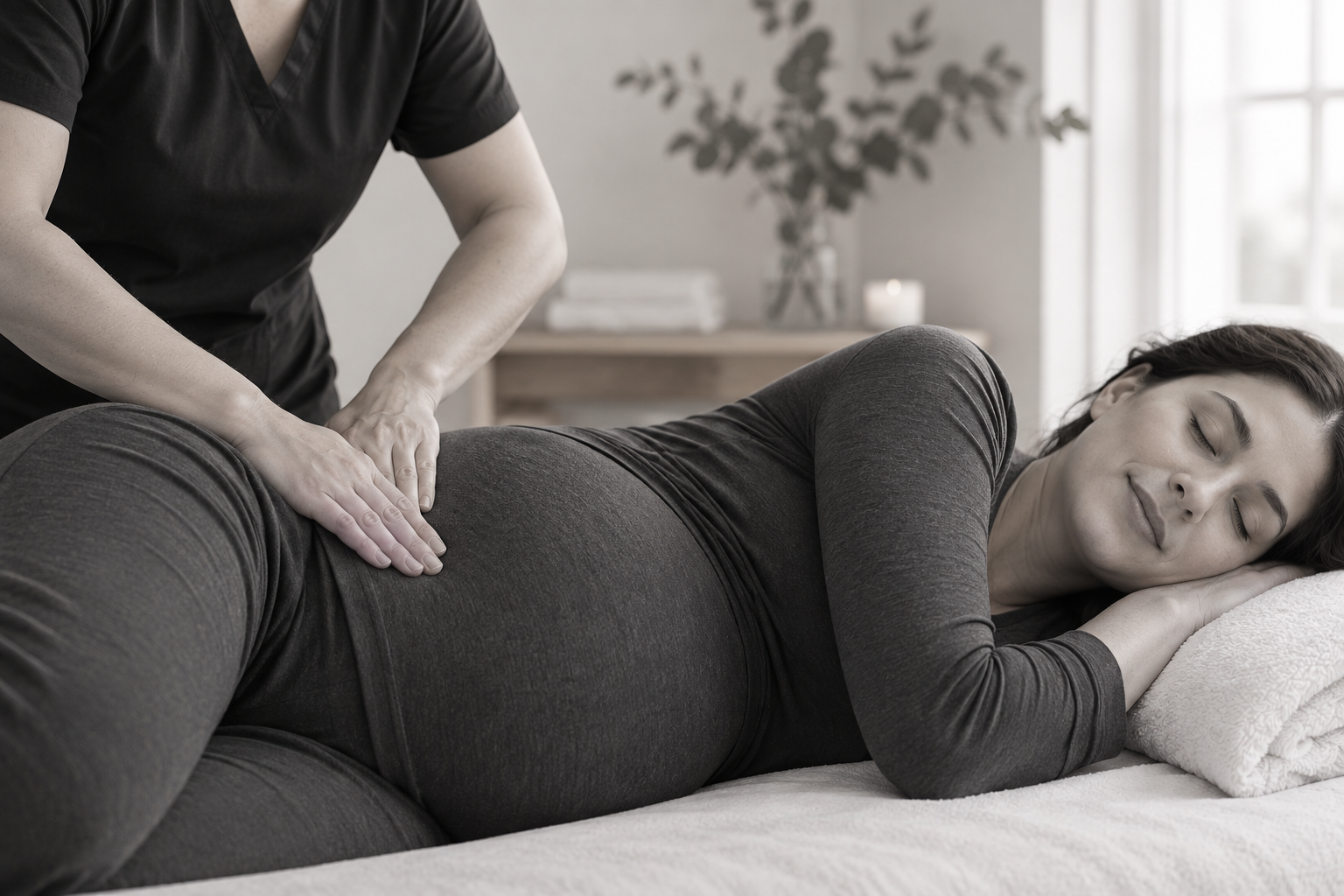
Second and third trimester - Positioning becomes the main focus. We avoid lying flat on your back and use side lying support instead.
Postnatal - Once you deliver, we shift toward the neck, shoulder and back tension that builds from feeding and carrying a newborn along with recovery from labor itself.
Each session runs 60 or 90 minutes, the same as our other sessions, so there is enough time to address tension without feeling rushed.
What Makes This Different From a Regular Massage Softened for Pregnancy
A real prenatal massage is not just your usual session with lighter pressure. We use pregnancy safe positioning and techniques built for the tension pregnancy actually creates like lower back strain and swelling, instead of the same routine we would use for a client who is not pregnant. Postnatal work follows the same idea. We often use trigger point therapy for the neck and shoulder tension that builds during early motherhood.
When to Check With Your Doctor First
Prenatal massage is usually safe for healthy pregnancies but not for every situation. If you have medical concerns or pregnancy related complications then check with your doctor before booking. This matters most with high risk conditions. A quick call to your provider is the safer step when you are in doubt.
What to Expect at Your Session
Your therapist starts by asking about your pregnancy, any discomfort and your comfort preferences. From there, we build the session around you. Expect supportive props instead of lying flat and expect your therapist to check in throughout. If anything feels off, say so. We will adjust right away.
Bringing It All Together
Pregnancy asks a lot of your body and the discomfort it brings deserves more than a lightly modified version of a regular massage. At Mudras, our Chelsea therapists build every prenatal massage session around your trimester and comfort. The tension pregnancy actually creates whether that is lower back strain, swelling or tension that lingers into early motherhood.
If you are looking for prenatal or postnatal massage in Chelsea, reach out directly to find a session time that works for you.
FAQs
Q. Is it safe to get a massage during the first trimester?
For most healthy pregnancies, yes. Sessions are adjusted for fatigue as well as nausea and sensitivity during this stage. Check with your doctor if you have any pregnancy related concerns.
Q. Can prenatal massage induce labor?
There is no good evidence that routine prenatal massage induces labor in healthy or uncomplicated pregnancies. Because pregnancy circumstances vary therefore any concerns about massage or labor should be discussed with your healthcare provider.
Q. Is deep tissue massage safe during pregnancy?
Deep tissue work is generally avoided during pregnancy. We use gentler and pregnancy specific techniques instead. Firm pressure is better suited after delivery, once your body has had time to recover.
Q. What is the best position to lie in during a prenatal massage?
Side lying with supportive props is the most common and comfortable choice especially after the first trimester and lying flat on your back is avoided as pregnancy progresses.
Q. How soon after giving birth can I get a postnatal massage?
This depends on your delivery and how your recovery is going. Many people wait a few weeks especially after a c section. Checking with your doctor first is the safest approach.
