

When your neck feels tight or your shoulders carry the strain of a long day, choosing a massage style can feel confusing. Deep tissue, trigger point work, myofascial release, and gentler techniques offer different ways of working with soft tissue. The most suitable approach depends on your symptoms, health history, comfort, and goals.
At Mudras Bespoke Therapeutic Massage in Chelsea, NYC, founder Yotam Kafri brings 24 years of professional experience to his signature BodyReset. You can describe what you feel and what you would like to do more comfortably without having to choose a technique in advance. Yotam considers the appropriate mix and adjusts it with your feedback.
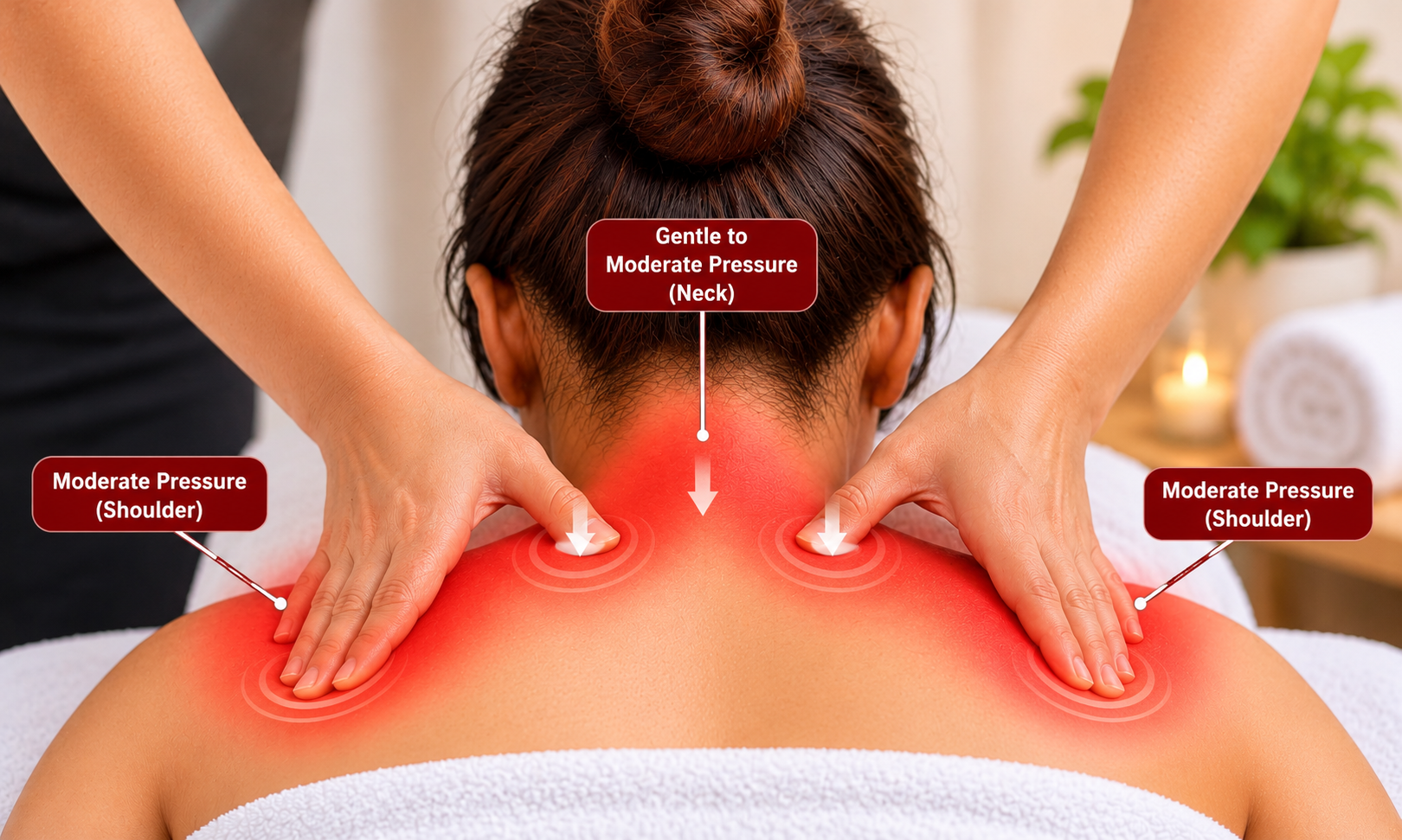
How Yotam Brings the Techniques Together
Your BodyReset begins with a conversation about where you feel discomfort, when it appears, and which activities or movements are affected. Tell Yotam about diagnoses, recent injuries, medications, and any treatment you are receiving. He may observe comfortable movements and assess relevant soft tissue by hand to guide the session; this does not replace a medical diagnosis.
With your consent, Yotam may work on the neck, shoulders, upper back, and other relevant areas. He can combine gentler strokes with focused pressure, mobility work, or assisted stretching when appropriate. The pace, pressure, and combination can change as the session progresses.
The technique comparison below explains the options. It is a guide to ways of working, rather than a checklist matching symptoms to treatments.
Comparing Massage Approaches for Neck and Shoulder Tension
These approaches may be included within BodyReset according to your assessment, preferences, and response. None is universally best for neck pain.
Deep Tissue Massage
Deep tissue massage uses slower strokes and focused pressure across relevant soft tissue, such as the shoulders and upper back. Yotam adjusts the pace and pressure to your response; persistent tightness does not automatically require firmer work.
Trigger Point Therapy
Trigger point therapy uses localized pressure on tender muscular areas. Yotam may combine it with broader work around the neck, shoulders, and upper back, adjusting to your feedback.
Myofascial Release
Myofascial release uses sustained pressure or movement applied to soft tissue, including the connective tissue around muscles. It offers another way to explore comfort and movement within the session.
Swedish Massage and Gentler Work
Swedish massage includes flowing strokes and kneading. Gentler work may suit your preferences when you feel stressed or sensitive to pressure, and Yotam can use it alongside more focused techniques.
What Does Research Say About Massage for Neck Pain?
Massage may help some people feel less tight or more comfortable, but research findings vary. The National Center for Complementary and Integrative Health describes possible short-term benefits for neck or shoulder pain. Mayo Clinic also notes that massage may lessen tightness and pain in people with long-term neck tension.
A 2024 Cochrane review included 33 studies involving 1,994 adults. For subacute or persistent neck pain, low-certainty evidence suggested that massage may make little or no difference to pain and function compared with placebo massage at around 12 weeks. This does not establish a universally best technique or predict an individual client’s response.
Consider massage as one possible part of a broader approach. Depending on the cause of your symptoms, movement, exercise, workstation changes, physical therapy, or other medical care may also be appropriate. Notice whether a session helps with activities that matter to you, such as turning your head or getting through a workday more comfortably.
Choosing a Practitioner: Credentials and Communication
Alongside relevant experience, look for these essentials:
License and registration: Verify the therapist’s New York license and current registration through the NYSED Office of the Professions.
Assessment: Expect questions about your symptoms, health history, and previous care. A bodywork assessment guides suitability and technique; it does not replace a medical diagnosis.
Pressure and positioning: You should be able to discuss preferences, ask for changes, and decline work on an area.
Relevant experience: Ask how the practitioner adapts sessions and recognizes when further medical assessment is needed.
Client Experiences with Neck and Shoulder Discomfort
Paige Womack: A professional artist and designer who works at a computer all day, Paige tried physical therapy and acupuncture before writing that Yotam "is the first person who has brought meaningful relief to my pain."
Carmindy Bowyer: Living with three herniated discs in her neck, Carmindy says his technique "helped ease the pain and discomfort for weeks."
These are individual client experiences, and results vary. Carmindy’s experience does not mean that massage treats herniated discs or replaces medical care. If you have a disc condition, discuss the suitability of massage with your healthcare professional.
Read the full reviews on our Google Business Profile.
Comfort During and After Your Session
Tell Yotam how the pressure feels throughout the session. You can request lighter work, a different position, or a pause at any time. Report sharp or shooting pain, tingling, or a need to brace immediately so he can stop or adjust the work.
Mild soreness can occur afterward, but it is not a measure of effectiveness. Ask Yotam about activity appropriate to your response. Seek medical advice for severe, unusual, or worsening symptoms, and report persistent soreness or bruising.
When to See a Healthcare Professional First
Seek emergency medical care for severe neck pain following an injury, such as a fall or car accident. A sudden severe headache or new weakness can also require urgent or emergency assessment, especially with other neurological symptoms.
Mayo Clinic recommends contacting a healthcare professional if neck pain is intense, does not improve after a few days, spreads into the arms or legs, or comes with a headache, numbness, weakness, or tingling. Neck pain with fever or feeling unwell also needs prompt medical advice.
If you already have a diagnosed neck condition, ask your healthcare professional whether massage is appropriate and share any precautions with Yotam before your session.
Inquire About a BodyReset with Yotam in Chelsea
To explore a founder BodyReset for familiar neck and shoulder tension, share what you would like to address and any questions about the session. You do not need to decide which technique to request.
Submit an inquiry through the Mudras website with your needs and preferred appointment times. Our team will help coordinate Yotam’s availability and guide you through the next steps.
Frequently Asked Questions
Q. How often should I get a massage for neck pain?
There is no standard schedule. Discuss your symptoms and goals, then reassess based on how you respond and whether any improvement lasts. Persistent or recurring pain may warrant further assessment instead of simply adding more sessions.
Q. Does deep tissue massage have to hurt?
No. You should be able to breathe comfortably and communicate throughout the work. Ask for an adjustment if pressure feels painful or makes you tense up. More pressure does not guarantee a better result.
Q. Why is my neck sore after a massage?
Temporary soreness can occur after soft-tissue work, especially if the pressure or activity was unfamiliar. It is not necessary for a session to be useful. Tell Yotam about soreness, and seek medical advice if it is severe, worsening, persistent, or accompanied by new symptoms.
Q. Is deep tissue or Swedish massage better for stress and tension?
Either may be considered depending on your preferences, symptoms, and response to pressure. Swedish techniques can provide gentler, flowing work, while focused pressure may suit some areas. BodyReset can combine approaches without assuming persistent tension requires deep tissue work.
Q. Can massage help headaches associated with neck tension?
Some people find bodywork helpful for associated muscular discomfort, but a headache does not identify its own cause. Seek medical advice for new, unusual, or recurring headaches. Sudden severe headaches or headaches with weakness or other neurological symptoms need urgent.
