

Post-Surgery Massage: Custom Recovery Support After Surgery
Recovery doesn't end when stitches come out or discharge papers get signed. The body needs time to heal, and how that healing progresses affects long-term comfort and function.
Massage after surgery supports recovery when applied with proper timing and technique. Not all bodywork suits post-operative care, and knowing when it's safe makes the difference between helpful support and potential complications.
This guide covers when post-surgery massage becomes appropriate, which techniques work best at different healing stages, and what to expect from sessions designed for surgical recovery.
Can You Get a Massage After Surgery?
Yes, but timing and technique matter significantly.
No therapist should touch someone recovering from surgery without the surgeon's explicit approval. This applies no matter how much time has passed or how well the incision looks.
General Timeline Guidelines
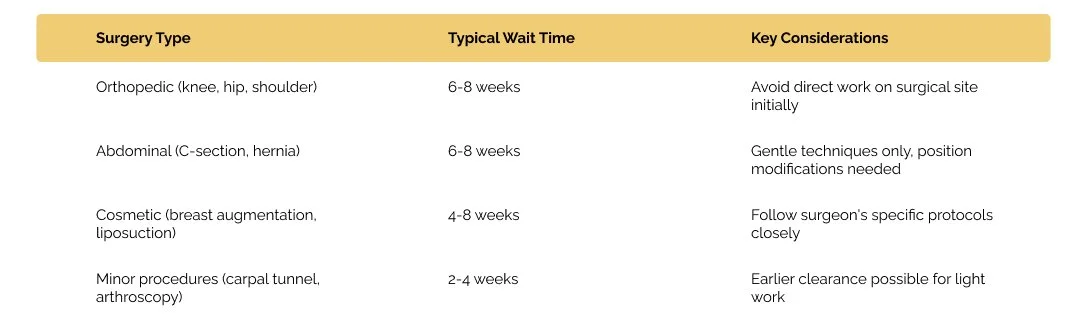
Minor procedures typically clear for massage at 2 to 4 weeks. Major surgery usually requires 6 to 8 weeks minimum.
What actually determines clearance goes beyond calendar dates. Healing progresses differently based on surgery type, individual health, age, complications, and how the body responds to the procedure itself.
When Post-Surgical Massage Is Safe
Massage becomes appropriate once incisions have fully closed with no scabbing or drainage. Swelling needs to show signs of decreasing rather than getting worse. The surgeon must provide explicit clearance, not just general approval for activity. No signs of infection can be present.
When to Avoid Post-Op Massage
Certain conditions make massage unsafe:
Active infection or inflammation at surgical site
Open incisions or wounds still healing
Blood clot risk in first few weeks
Certain medications like blood thinners
Fever or systemic illness
Recovery Timeline by Surgery Type:
Benefits of Post-Surgery Massage for Recovery
Post-surgical massage supports healing when applied correctly at the appropriate recovery stage.
Reduces Swelling and Lymphatic Congestion
Surgery disrupts normal lymphatic flow. Fluid accumulates around the surgical site and creates swelling that slows healing.
Lymphatic drainage techniques use gentle, rhythmic strokes to move excess fluid away from affected areas. This reduces post-operative swelling and helps tissues heal faster. The effect shows most clearly in the first 2 to 3 months when swelling remains most pronounced.
Prevents Scar Tissue Buildup
The body produces scar tissue during healing. Without intervention, this tissue can form adhesions that restrict movement and create long-term discomfort.
Gentle scar mobilization after complete healing maintains tissue flexibility and reduces problematic adhesions. Starting this work at the right time prevents restrictions that become harder to address years later.
Improves Circulation and Healing
Massage increases blood flow to the surgical area. More blood means more oxygen and nutrients reaching tissues that need them for repair. Metabolic waste that accumulates during healing gets removed faster with improved circulation.
The body heals more efficiently when circulation runs optimally. This effect compounds over multiple sessions rather than showing dramatic results after one treatment
Relieves Compensatory Pain
The body compensates for surgical areas by altering movement patterns. These compensations create tension in muscles working harder than normal. Post-surgery massage addresses these secondary pain patterns that develop during recovery.
Reduces Stress and Supports Recovery
Surgery creates significant physical and emotional stress. The nervous system stays activated in ways that can interfere with healing.
Gentle massage shifts the body from stress response to rest mode. The parasympathetic nervous system activates. Muscles release tension they've been holding. Sleep quality improves. The body allocates more resources to repair when it's not managing constant stress signals.
Best Post-Surgery Massage Techniques for Recovery
Not all massage techniques suit post-operative recovery. Some approaches work significantly better than others depending on where someone sits in the healing timeline.
Lymphatic Drainage Massage
Lymphatic drainage uses extremely gentle, rhythmic strokes that follow the body's lymphatic pathways. The pressure stays lighter than standard massage because lymph vessels sit close to the skin surface.
The technique moves fluid away from the surgical site toward lymph nodes where the body processes and eliminates it.
Best for: Managing swelling in the first 2 to 3 months after surgery. Particularly effective after procedures that create significant fluid accumulation.
Technique specifics:
Pressure so light it barely indents skin
Slow, repetitive strokes in specific directions
Work starts away from surgical site, gradually moving closer
Sessions typically 30 to 45 minutes
Modified Swedish Massage
Swedish massage adapted for post-operative care uses light to medium pressure on areas away from the surgical site. The work addresses compensatory tension while promoting relaxation and circulation.
Pressure stays well below standard massage levels. The therapist avoids the surgical area entirely in early recovery, gradually working closer as healing progresses.
Best for: Addressing tension in non-surgical areas. Someone healing from knee surgery can receive work on upper body from the start.
Myofascial Release
Myofascial release addresses restrictions in the fascia surrounding muscles. Surgery creates fascial restrictions that limit movement and create pulling sensations.
The technique uses sustained pressure and stretching to restore how tissue moves. Work feels different from standard massage because fascia responds slowly.
Best for: Addressing restrictions once initial healing completes. Typically appropriate 8 to 12 weeks post-surgery.
Scar Tissue Massage
Once scars fully heal, specific mobilization techniques improve flexibility and appearance. The work involves gentle manipulation of scar tissue to prevent it from adhering to underlying structures.
Best for: Improving scar mobility and reducing adhesions. Typically begins 3 to 6 months after surgery once scars have completely matured.
What to Avoid
Certain techniques create risk during post-operative recovery:
Deep tissue work near the surgical site
Aggressive pressure anywhere on the body
Hot stone or heat therapy in early recovery
Any work that causes pain beyond mild discomfort
What Surgery Types Benefit Most from Post-Op Massage
Different procedures create different recovery challenges. Massage addresses specific issues based on surgery type.
Orthopedic Surgery (Knee, Hip, Shoulder Replacement)
Joint replacement creates significant swelling and stiffness. The body compensates for limited mobility by altering movement patterns throughout the kinetic chain.
Post-operative massage reduces swelling through lymphatic work and addresses compensatory tension in surrounding areas. Someone recovering from knee surgery often develops hip and lower back tension from altered gait patterns.
Abdominal Surgery (C-section, Hernia Repair, Hysterectomy)
Abdominal procedures affect core stability and breathing patterns. Scar tissue can form adhesions that restrict organ mobility.
Gentle lymphatic work reduces swelling. Scar mobilization once healed prevents problematic adhesions. Positioning modifications keep pressure off the abdomen during sessions.
Cosmetic Surgery (Breast Augmentation, Liposuction, Tummy Tuck)
Cosmetic procedures often create significant swelling and fluid accumulation. Post-surgical massage dramatically improves results by reducing swelling, improving contour, and preventing irregular healing.
Many cosmetic surgeons actively recommend massage as part of recovery protocols. The work begins earlier than with other surgery types, sometimes within 2 to 3 weeks.
Minor Procedures (Carpal Tunnel Release, Arthroscopy)
Smaller procedures typically allow earlier massage clearance. The body compensates less dramatically, and healing happens faster.
These surgeries still benefit from targeted work. Carpal tunnel release requires attention to the entire arm and shoulder girdle. Faster return to normal massage schedules becomes possible, often within 4 to 6 weeks.
What to Expect During Your Post-Operative Massage Session
Before the Session
Bring documentation of surgeon clearance. Share detailed surgery information including procedure type, date, complications, and restrictions. Wear comfortable clothing that allows access to treatment areas.
During the Session
Modified positioning keeps pressure off healing areas. Pillows and bolsters provide support. The therapist avoids the surgical site initially, working on areas away from the incision.
Techniques stay gentle in early recovery. Pressure remains well below typical massage levels. Session length may be shorter, typically 30 to 60 minutes rather than 90.
Technique progression timeline:
Weeks 6-8: Lymphatic drainage, very light Swedish on non-surgical areas
Weeks 8-12: Gradually increased pressure, gentle myofascial work
Months 3-6: Scar mobilization begins, more comprehensive treatment
6+ months: Closer to standard massage with surgical history awareness
After the Session
Increased fluid intake helps the body process mobilized lymphatic fluid. Monitor for adverse reactions like increased swelling, new pain, or redness at the surgical site.
Continue following all activity restrictions the surgeon specified. Schedule follow-up sessions based on recovery progress.
At Mudras in Chelsea, NYC, therapists coordinate with surgical teams when appropriate to ensure safe, effective post-surgery massage tailored to individual recovery needs.
Choosing a Qualified Therapist for Post-Surgical Massage Recovery
Not all massage therapists have training in post-operative care. Specific qualifications matter for safe treatment.
Essential Qualifications
Look for experience with post-surgical clients, understanding of contraindications, knowledge of healing timelines, willingness to communicate with medical teams, and training in lymphatic drainage.
Questions to Ask
Have you worked with clients recovering from [specific surgery type]?
What modifications do you make for post-surgical clients?
How do you determine appropriate pressure and techniques?
Will you coordinate with my surgeon if needed?
Red Flags
Avoid therapists who dismiss the need for surgeon clearance, promise unrealistic results, refuse to modify routines, or lack specific post-operative training.
Mudras massage specialists in Chelsea, NYC specialize in customized post-operative massage with appropriate modifications for various surgery types and recovery stages.
Final Thoughts
Post-surgery massage supports recovery when applied with appropriate timing, technique, and modifications. Surgeon clearance remains essential before any bodywork following surgical procedures.
Benefits include reduced swelling, improved circulation, managed scar tissue, and relief from secondary pain patterns. The right therapist understands healing timelines and applies techniques that support surgical outcomes.
Ready to support recovery with post-surgery massage? Book a consultation at Mudras in Chelsea, NYC for customized post-operative treatment that respects surgical restrictions while promoting healing.
Frequently Asked Questions
How soon after surgery can I get a massage?
Minimum 2 to 4 weeks for minor procedures, 6 to 8 weeks for major surgery. Always get surgeon clearance first. Individual healing varies based on surgery type, complications, and overall health.
Will massage help with post-surgical swelling?
Yes. Lymphatic drainage massage specifically addresses swelling by moving excess fluid away from the surgical site. Most effective in the first 2 to 3 months when swelling remains most pronounced.
Can massage break up scar tissue?
Once scars fully heal (typically 3 to 6 months post-surgery), specific mobilization techniques improve flexibility and reduce adhesions. Starting earlier in the healing timeline produces better results than waiting years.
Is it safe to massage near my incision?
Not until fully healed and the surgeon provides clearance. Initially, therapists work around the surgical area. Once cleared and the incision is completely closed, gentle work near the scar can begin.
How often should I get post-surgical massage?
Weekly sessions for the first month after clearance help manage swelling and prevent adhesions. Bi-weekly maintenance typically continues for 2 to 3 months. Frequency depends on surgery type and individual recovery.
Does post-operative massage hurt?
Properly performed post-surgery massage should never cause pain. Early recovery work uses extremely gentle pressure. Some discomfort during scar mobilization is normal but should feel like mild stretching, never sharp pain.