

Sports Massage: Complete Guide to Athletic Recovery
Training hard comes with a cost that builds over time. Muscles stay tight between workouts. Minor aches turn into persistent problems. Recovery takes longer despite doing everything right, and performance plateaus even though you're putting in the work.
Sports massage addresses what happens when you push your body repeatedly without giving tissues the support they need to bounce back. Understanding what is a sports massage and how it differs from regular bodywork helps you use it strategically for better recovery and performance.
This guide covers what makes sports massage different, which techniques work best for athletic recovery, and why serious athletes treat it as essential rather than optional.
What Is a Sports Massage?
Sports massage is specialized bodywork that enhances athletic performance, reduces injury risk, and speeds recovery from training stress on muscles, tendons, and connective tissue.
Relaxation massage distributes time evenly across your entire body. Sports massage targets specific areas your activity stresses most. Runners get concentrated work on calves, hamstrings, and IT bands. Swimmers receive extensive shoulder and lat treatment. Cyclists need focused quad and lower back attention.
Pressure runs deeper because the goal involves correcting imbalances and releasing adhesions rather than providing temporary relaxation. Therapists who specialize in this understand how your body moves and can spot compensation patterns before they cause injuries.
Competitive athletes schedule regular sessions around training cycles. Recreational athletes training for races or personal goals use it to manage accumulated stress. Anyone dealing with repetitive strain from consistent physical activity benefits from this targeted approach.
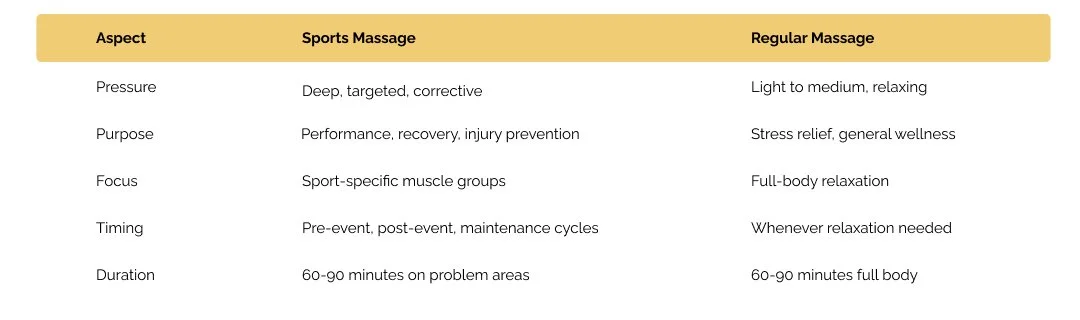
Sports Massage vs. Regular Massage: Key Differences
Techniques & Pressure
Sports massage uses deeper, targeted pressure on specific problems. Therapists work methodically to release adhesions, deactivate trigger points, and restore function through deep tissue manipulation, cross-friction work, and myofascial release.
Regular massage focuses on relaxation with lighter pressure distributed evenly for stress reduction rather than correcting dysfunction.
Purpose & Timing
Sports massage therapy serves distinct purposes based on timing. Pre-event sessions warm up tissues before performance. Post-event treatment clears metabolic waste immediately after exertion. Maintenance sessions between events prevent injury during training cycles.
Regular massage provides general wellness whenever relaxation feels needed, without relationship to training schedules.
Focus Areas
Sports massage concentrates heavily on areas most stressed by your specific activity. Regular massage distributes time across your entire body for comprehensive relaxation.
What's Included in a Sports Massage?
Sessions start with questions about your activity level, training schedule, pain points, and injury history. Range of motion testing reveals restrictions and imbalances needing attention.
Techniques commonly used:
Deep tissue manipulation reaching layers lighter pressure can't access
Trigger point therapy deactivating spots that create referred pain
Myofascial release for tight connective tissue around muscles
Assisted stretching improving flexibility beyond what static stretching achieves
Cross-friction work breaking up scar tissue and adhesions
Muscle flushing for post-event recovery using rhythmic pressure
Sessions typically run 60 to 90 minutes with time allocated based on your sport. A runner might receive 40 minutes on legs, 20 on hips and lower back, 15 on shoulders and neck. A swimmer gets heavier focus on shoulders, lats, and upper back.
Afterward, hydration helps flush released metabolic waste. Rest or light activity works better than intense training immediately following treatment. Your therapist may recommend strategic heat or ice based on tissue condition.
Sports Massage for Workout Recovery
How quickly you recover determines how soon you can train hard again. Sports recovery massage speeds this up in several ways.
Why Massage After Workout Matters
Intense training damages muscle fibers. This creates soreness that peaks 24 to 48 hours later. Massage after workout reduces how bad this feels and how long it lasts by improving circulation to damaged tissues and clearing out inflammatory waste that builds up during exercise.
Blood flow increases significantly during treatment. More blood delivers oxygen and nutrients your muscles need for repair while carrying away waste products. Your body does this naturally, just much more slowly.
Range of motion often decreases after hard workouts as tissues tighten up protectively. Sports recovery massage restores normal mobility faster. This lets you move properly in your next session rather than compensating around tight spots.
Best Timing for Recovery
Immediately post-workout (0-2 hours): Delivers the most direct impact on waste removal and inflammation reduction. Many athletes book sessions right after key training or competitions.
24-48 hours after intense training: Targets DOMS as it peaks, managing soreness that interferes with daily activities or your next workout.
Weekly or bi-weekly maintenance: Prevents chronic tension from building up to the point where it causes injury or tanks your performance.
What to Expect During Recovery Sessions
Muscle flushing techniques use lighter, rhythmic pressure to move fluid through tissues. This feels different from deep corrective work and focuses on circulation rather than releasing specific tight spots.
Your most overworked areas get concentrated attention. Hamstrings for runners, quads for cyclists, shoulders for swimmers all receive methodical treatment. Expect some discomfort in spots holding significant tension, but this should feel productive rather than making you tense up against the pressure.
Many competitive athletes integrate sports recovery massage into training schedules the same way they plan workouts and rest days. A marathoner books weekly sessions during peak training, then adds post-race treatment. A CrossFit athlete schedules bi-weekly maintenance plus extra sessions after competitions.
Types of Sports Massage Therapy
Pre-Event Sports Massage
Light to moderate pressure warms up tissues and activates them before performance. Sessions run 10 to 30 minutes focused on areas that will work hardest. This increases circulation and improves tissue pliability without creating fatigue deeper work can cause.
Post-Event Sports Massage
Moderate pressure reduces tension and clears metabolic waste from intense exertion. Sessions run 30 to 60 minutes targeting areas most stressed during the event, balancing relief with not overworking already fatigued tissues.
Maintenance Sports Massage
Between events, maintenance focuses on injury prevention and maintaining optimal tissue quality during training cycles. Weekly or bi-weekly sessions work best for athletes training intensely, catching chronic restrictions before they cause problems.
What Massage Is Best for Sports Recovery?
Sports massage works best for sports recovery because it specifically targets areas your training stresses, uses techniques that speed up your body's natural recovery, and handles both acute training stress and chronic tightness from repetitive athletic demands.
Deep tissue massage works well for chronic issues but doesn't cover the full range of recovery needs athletes face. Swedish massage provides relaxation but lacks the targeted, corrective approach athletic recovery requires.
Thai massage offers outstanding flexibility benefits through assisted stretching. Myofascial release handles fascial restrictions effectively. Many sports massage therapists use these techniques together rather than treating them as separate types.
Sports recovery massage provides the best combination of performance support, injury prevention, and recovery acceleration because people developed it specifically for athletic demands. The techniques, pressure levels, and session structure all match what training-stressed bodies actually need.
Benefits of Regular Sports Massage
Consistent sessions provide cumulative benefits single appointments can't achieve.
Injury prevention happens through early identification of muscular imbalances and restrictions before they cause breakdowns. Enhanced performance results from maintaining optimal tissue quality and full range of motion. Your body moves more efficiently when restrictions don't interfere with natural patterns.
Faster recovery between sessions allows higher training volume and intensity without breaking down. Reduced soreness makes training more sustainable. Less severe DOMS means consistent training rather than needing extended recovery.
Additional benefits include:
Maintained flexibility and mobility that performance requires
Better management of chronic issues training aggravates
Increased body awareness to recognize tension patterns early
Mental focus and stress relief supporting consistent training demands
Who Should Get a Sports Massage?
Competitive athletes at any level use sport massage as standard training support. Professional, college, and serious amateur athletes integrate regular sessions as essential maintenance rather than optional luxury.
Recreational athletes training consistently for personal goals benefit equally. Marathon training, regular cycling, swimming for fitness, or recreational team sports all create demands that targeted bodywork handles effectively.
Runners manage IT band syndrome, plantar fasciitis, and chronic calf tightness through focused treatment. Cyclists handle quad dominance and lower back strain. Weightlifters and CrossFit athletes deal with shoulder issues and chronic tension from repetitive heavy loading. Swimmers manage shoulder impingement and lat restrictions.
People with physically demanding jobs face similar repetitive stress. Construction workers, healthcare professionals on their feet all day, and others with taxing occupations benefit from the same targeted approach athletes need.
At Mudras in Chelsea, NYC, sports massage specialists work with athletes across all sports and fitness levels throughout Manhattan.
Wrap Up
Sports massage provides targeted support for the specific demands athletic training places on your body. It handles both immediate recovery needs and chronic restrictions from repetitive movement, helping you train consistently without breaking down.
Benefits include faster recovery, reduced injury risk, maintained mobility, and enhanced performance through optimal tissue quality. Regular sports massage therapy becomes as essential to training success as proper programming and nutrition.
Ready to experience how sports recovery massage supports your training? Book a session at Mudras in Chelsea, NYC, for specialized treatment that handles your specific athletic demands.
Frequently Asked Questions
What is a sports recovery massage?
Sports recovery massage is bodywork performed after training or competition to reduce soreness, clear metabolic waste, and speed natural recovery processes. Sessions typically occur within 48 hours of intense exertion.
What's the difference between sports massage and regular massage?
Sports massage uses deeper, targeted pressure on sport-specific areas for performance and recovery. Regular massage provides full-body relaxation with lighter pressure for stress relief rather than athletic performance support.
What's included in a sports massage?
Sessions include assessment of activity level and problem areas, deep tissue work, trigger point therapy, myofascial release, assisted stretching, and recommendations for hydration and self-care between appointments.
Does sports massage hurt?
Deeper pressure may feel uncomfortable in areas holding significant tension but should feel productive rather than painful. Communication with your therapist ensures pressure stays in the effective range.
How often should I get sports massage?
Athletes training intensely benefit from weekly sessions. Recreational athletes typically do well with bi-weekly maintenance. Add sessions after competitions or particularly hard training weeks to manage acute stress.
When should I schedule massage around training?
Schedule maintenance on recovery days, not before hard workouts. Post-event massage works best within 2 hours of competition or 24-48 hours later for DOMS management. Avoid deep work the day before races.